Showing posts with label Current Contemplation. Show all posts

Friday, May 18, 2018

Current Contemplations: Prepared Vs Ready


Lately I've been thinking back to a conversation I had with my most excellent mentor, Dr. Wright.  It was around three to four years ago, and I was talking about my confusion over people my age already getting married and having kids.  He told me that no one ever felt ready, but that the only way to be ready is to do whatever it is you want to do - like getting married.

At the time I thought that was impossible.  How can you do something you're not ready to do? The closest thing I could figure at the time was that it was similar to reading Plato as an eighteen year old - you don't feel ready to engage with him, but by doing the reading you made yourself ready to read dense philosophy.

Now, however, I understand even better what Dr. Wright was talking about, and he was 100% right (as I often find the wiser, mentor types are).  Although I will make the subtle distinction to alter his advice to say: you will never feel ready, but you can be prepared.

By this I think of my nephew who wants to be on Broadway.  He currently lives in California and goes to a good JC out there.  However, he posted on Facebook that he wants to apply to a university out here in New York and move out here to pursue his dreams.  He was asking for advice and, via private messaging, we talked about his desire to get out to the City.

The main thing he mentioned that was keeping him from immediately going out here for school was the financial aspect.  I completely understood - and do understand - that conundrum.  Wanting to move out, but worrying about having enough money to do so is a serious concern.  But I ended up telling him the same thing, more or less, that Dr. Wright told me.

That you will never feel ready.  You will never feel like the amount that you saved is enough.  You will never feel like your paycheques will cover everything.  You will never feel like you want to leave everyone you know and love back home.  It's exciting, but it's also scary because, of course, you've never done something like this before.  But that doesn't mean you should let that stop you.  Because you will never feel ready until you take the leap of faith off the cliff.

However, that doesn't mean you can't be prepared.  By this I mean you can be smart about taking the leap.  You can try to budget out a reasonable cushion of savings, for instance (I didn't move out to New York with only $10 in my pocket and a one way plane ticket like in the films).  You can research costs ahead of time and message people who have done what you want to do.  There is a way to be reasonable prepared for success without ever feeling ready.  And I think this is the best you can hope to do in life, because like Dr. Wright said, you will never feel ready.

Although lately I've also considered situations in which this is swapped, or the rare instances where you feel both prepared and ready.  I think pre-teens and teenagers feel ready for things they aren't always prepared for - like moving out on their own or being in a long-term committed relationship.  This doesn't mean that all pre-teens and teenagers are, but I would assume most don't understand all the consequences of their actions (like most parents tell them and experts talk about all the time).  And I think this is a normal part of being a teen.

Conversely, after university, I find that most of my friends are reasonably prepared for what the world will throw their way, but almost all of them don't feel ready to go out and start their lives as adults.  Of course, like when we were pre-teens/teenagers, that doesn't stop us from pursuing what we think is the right thing to do.  However, that doesn't make it any less scary.

In my own life, I think the only time I've felt both prepared and ready is when I went off to university.  I was more than ready to leave my small hometown and I was also prepared to do so by the time I was a senior in high school.  But that's the only time I can remember those two things aligning.

It's weird to think that if you had told me then, that in only five years I would graduate top of my class from university with a film degree, stay in the honours programme, live on my own in New York City, and work as an executive assistant at HBO, I think I would've been even more eager to begin what I would've perceived as a new and better life.

But now I realise how much in life you go in blind and the thing that makes you "prepared" for anything that comes your way are the friends and family that care about you (and a little elbow grease).  And honestly, a City is not always more exciting than the country.

Monday, April 23, 2018

Current Contemplations: Moral Relativism in Children's Programmes


Lately I've been thinking a lot about Moral Relativism - specifically moral relativism in children's programmes.

The online Stanford Encyclopedia of Philosophy defines "Moral Relativism" as:
Moral relativism is an important topic in metaethics. It is also widely discussed outside philosophy (for example, by political and religious leaders), and it is controversial among philosophers and nonphilosophers alike. This is perhaps not surprising in view of recent evidence that people's intuitions about moral relativism vary widely. Though many philosophers are quite critical of moral relativism, there are several contemporary philosophers who defend forms of it. These include such prominent figures as Gilbert Harman, Jesse J. Prinz, J. David Velleman and David B. Wong. The term ‘moral relativism’ is understood in a variety of ways. Most often it is associated with an empirical thesis that there are deep and widespread moral disagreements and a metaethical thesis that the truth or justification of moral judgments is not absolute, but relative to the moral standard of some person or group of persons. Sometimes ‘moral relativism’ is connected with a normative position about how we ought to think about or act towards those with whom we morally disagree, most commonly that we should tolerate them. (x)
And indeed, I am thinking of this general definition that Stanford has laid out when I consider "Moral Relativism".  In layman's terms, that absolute moral judgements (ie if something is objectively "good" or "bad") don't exist.  Instead, what is defined as "moral" ("good/"bad"/etc.) is relative or, it depends upon a subjective perspective when comparing groups of people/individuals.  For instance, the concept of capitalism could be thought as a public "good" in the United States, but "bad" in China.

With this definition in mind, it is obvious that most Christians fundamentally disagree with moral relativism.  There is an objective standard with which to measure the "goodness" or "wickedness" of one's actions - that of God's commands.  And, unsurprisingly, moral relativism is also at odds with other major religions as well like Judaism and Islam.

But although I do not agree that moral relativism is an accurate way to depict the world when taken to the fullest extent of it's meaning, I think that it can still be - and should be - implemented effectively into children's programmes.  The two best examples that I've watched recently that would advocate for this position are in "A Series of Unfortunate Events" and "Gravity Falls".

In "A Series of Unfortunate Events", the idea of moral relativism is manifested by the 7th book, in which the Baudelaire orphans are challenged with their first "moral dilemma".  They are asked to break the innocent Jacques Snicket out of jail in order to save him from a death sentence he doesn't deserve.  The Baudelaires know that breaking someone out of jail is against the rules of the town, but because Jacques is not actually guilty of any crimes, they decide that it is okay to save an innocent man.  As the series progresses, the Baudelaires decide to steal from a man who gave them nothing but trust, to run away from law officials, and to join the wicked Count Olaf's acting troupe, to list but a few morally questionable acts they do in order survive, find out answers to a mystery they are pulled into, and in order to pursue the "greater good".

Throughout the series, the idea that "good" and "evil" exist are not questioned.  It is the introduction of Life (with a capital "L") that makes the distinction between the two more difficult and complex to answer.  For instance, as the series progresses, the fact that Count Olaf is the "villain" never changes.  However, the Baudelaires' perception of him as a two-dimensional villain does.  It is revealed throughout the story that Count Olaf may have become an orphan himself due to the actions of the Baudelaire parents, at one point he was on the "fire fighting" instead of "fire starting" side of the secret organization, and at the end of his life he did at least one last good act by helping his former love interest, Kit Snicket, deliver her child.  Meanwhile, the Baudelaires themselves go from children who simply follow the word and direction of the adults put in charge of their well-being to thinking for themselves and having more agency in their lives as previously stated.

In short, I think it is good for children not to think of morality as purely relative, but it is important for them to understand that most people are not fully good or fully evil due to a simple, two-dimensional picture of their character.  Other people are three-dimensional, just like yourself, and understanding that people have both good and bad things in their past is a foundational part of any child's development.

Actions and choices taken in free will can be determining factors in labeling an individual as a "good" or "bad" person.  And most people rarely commit knowingly "bad" actions.  I agree that people generally tend to do what they think is right based upon a variety of factors (cultural, socio-economic, religious backgrounds, etc).  However, the idea that these actions will never be able to have a common rubric with which to be measured against is where I think the idea of relativism goes too far.

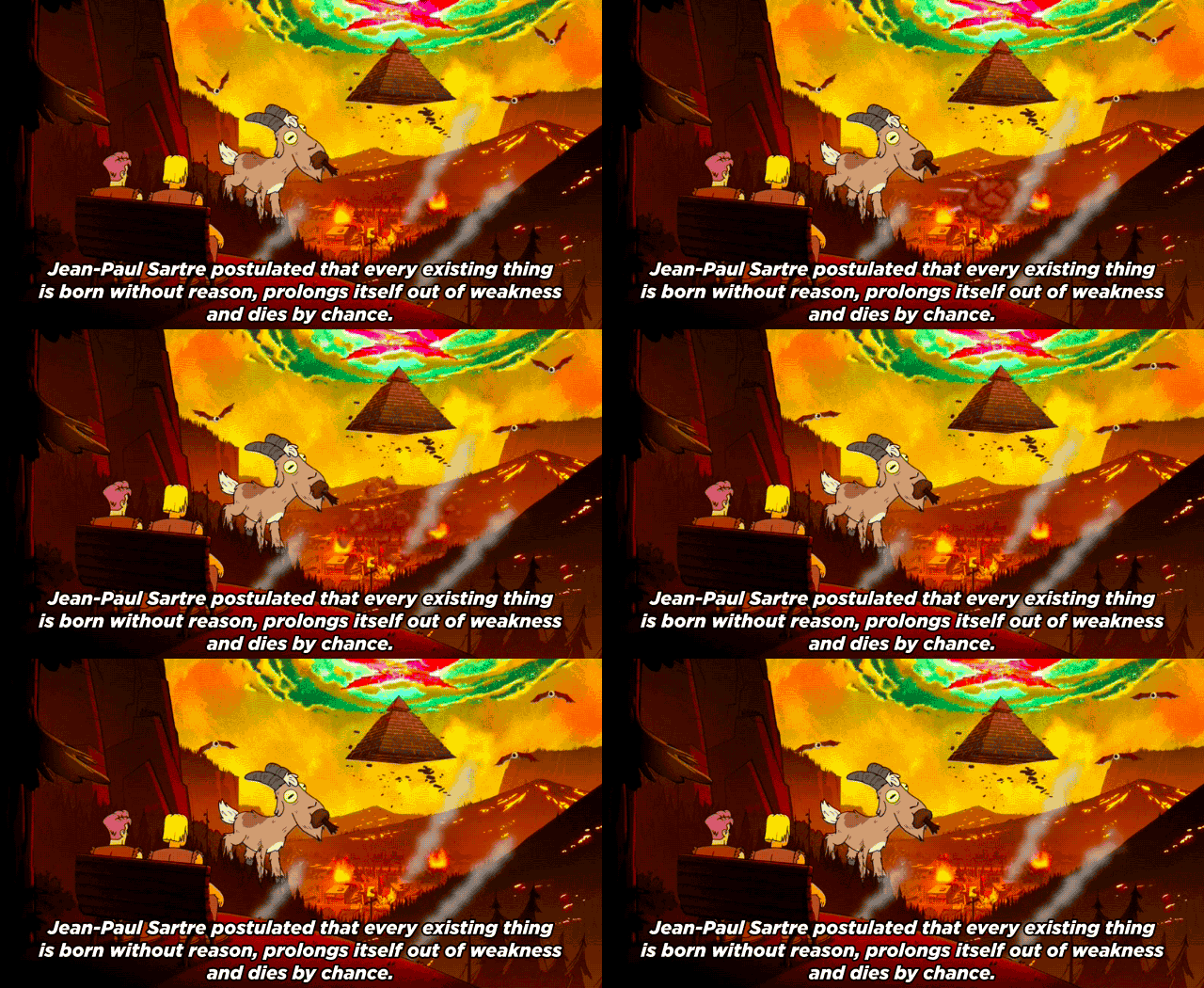
I think this is perfectly demonstrated in "Gravity Falls", in which moral relativism is cheekily referenced in-show multiple times.  However, the larger, over-arching themes of the show prove that relativism can be held in check with a solidly Christian message underneath.  (Note: The creators of "Gravity Falls" are definitely not religious - I believe Alex Hirsch, the mastermind behind the series, is actually an atheist.  Rather, as a Christian viewer I have detected Christian thematic elements that are evident in the series).

Throughout the show the development of the main characters, but in particular Stanley and Stanford Pines, utilizes moral relativism to its advantage.  Throughout the show characters try to do the right thing in tough situations with the information they have.  And once again this adds a level of realism and complexity to each of the protagonists.

It is exactly this which allows characters like Grunkle Stan to be a liar, thief, and a criminal, but at the same time be heroic and honourable.  His deep love of money, it is later revealed, comes from a traumatic incident in which he was kicked out of his home/family due to "costing the family millions".  As a result, his quest for money stems from the fact that he wants to be reconciled with his family, and his love of money comes from his love for family.  Although this does not excuse the crimes he committed in the past, it does allow the audience to gain deeper sympathy and appreciation for his character.  It also allows for his character to develop from a grifter/swindler to someone who uses his con-man skill set to trick the villain of the series and defeat him, thereby subverting his dishonourable lifestyle to an ultimately honourable act.

Essentially, the show continually uses this concept of moral relativism, where acts of vandalism, lying, stealing, etc. that are usually considered "bad" are eventually subverted into resourcefulness which allows the characters to vanquish over evil.  It is what allows for reconciliation and ultimate self-sacrificial love to triumph in the face of a demonic triangle, and for that I think it shows that moral relativism, as it introduces complexity/relatability into the narrative and characters, is important for children to be exposed to, while at the same time it is not completely incompatible with objective Christian themes of "goodness" like forgiveness, reconciliation, and self-sacrificial love.

Not to mention it makes for one hellavua punch-line.

Thursday, April 12, 2018

Current Contemplations: Amazing Grace (Building)


Recently, it hit me that for as much as I love symbols and signs in literature, in my real life I'm kind of an oblivious, ignorant human.  And this was particularly true as I thought back to how my goal for 2018: learning patience and obedience to God.  Yet instead of granting me more of that (specifically, like an unfeeling robot who only follows rules), God instead had the mercy and love to answer my request for more patience and obedience with an overflowing abundance of grace.

I still can't articulate everything that lead to that conclusion in one place, but I know it's true in the depths of my soul.  And in fact, in case I need a reminder, I just have to remember the job opportunity God granted me - and I'm not talking about the job itself.

HBO headquarters in New York City has two buildings.  One is the, predictably named, HBO Building, which they own and it's where most people who work at HBO, well, work.  But it's connected via elevator banks to a neighbouring building of which they rent only a handful of floors out to their other departments.  I just so happen to work in this side building, out of all the chances that I could've worked at HBO, I was assigned to someone who works here.

The name of this other building?

Grace.

That's right.  I literally work in the GRACE Building (and in fact, on the front of the building is just the word GRACE in all capital letters when you enter).

Anyways, I thought I would share this little fun fact with you, my avid blog readers, as you enjoy God's VERY OBVIOUS SYMBOLISM along with me.  And for all my love of literature and films, I can't believe I didn't catch this one sooner!

Wednesday, April 11, 2018

Current Contemplations: Zuckerberg Hearings

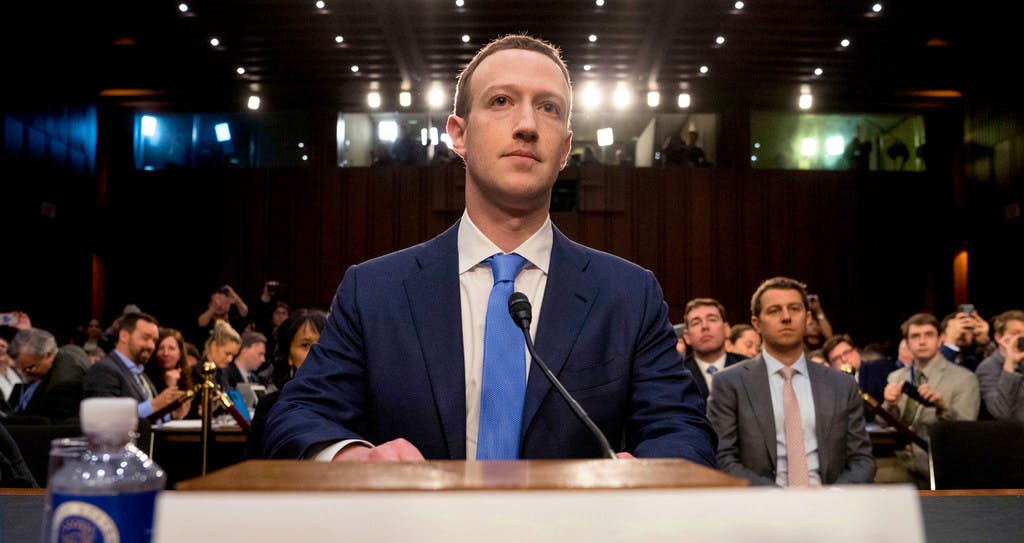
Mr. Zuckerberg, CEO of Facebook, at the congressional hearing in Washington DC
Watched the Zuckerberg hearing yesterday and today, and boy howdy was it interesting.  As someone who is personally invested in the media industry flourishing, I tried to be as objective as I could, and here were some of my thoughts about it:

1) It's all a definition game.  Seriously.  Everything from "hate speech" to "ownership" to "media" to "data" - not a single person in the conversation uses these terms in the same way with the same understanding of what they mean.  Also, although there is a general agreement of "censor but don't censor too much", "legislate for safety, but not too much", and that the "details matter", no one seems to want to get into specifics or take responsibility for defining these tricky boundaries.

2) It's all PR.  Both from Mr. Zuckerberg and the senators/congressmen/women.  The representatives want to look good at professing their constituent's outrage and that they're "doing something about it".  Mr. Zuckerberg and Facebook want to show that they are still a trustworthy company that will make a change.

3) Everyone needs to shut up.  Similar to point 2, the politicians asking Mr. Zuckerberg questions need to let him answer and stop interrupting him.  It might be fun to yell at him for hours on end, but one of the worst things is to see congresspeople and senators fail to understand the nuances that Mr. Zuckerberg tries to explain.  Granted, nuance isn't fun or headline news or a comfort when a security breech like this has happened, But.  It.  Is.  So.  Important.  Without it, how do does DC expect to make informed policy decisions going forward? One example of this is their inability to understand how data is still able to be "scraped" despite it being wiped from Facebook's servers.  I'm not a computer science whiz, but as a basic consumer of social media (and someone who works in media), this seems pretty straight forward to me.  A third party app developer is a separate entity with their own servers, storage, etc.  As a result, Mr. Zuckerberg could wipe information from all of Facebook's servers, but he has no control over outside/third party companies who have it stored.

4) DC versus DC and advancing political party goals.  Also similar to point 2, this trial seems to be all about advancing party policies/perspectives whether it's trying to get Mr. Zuckerberg to promise to back more legislation and regulation for "tech companies" or for him to admit to censoring Republican/conservative messages.  Using this particular high profile media case (because media enjoys hyping up cases about media, just like how Hollywood enjoys giving out awards to films about Hollywood) to advance these positions just seems like a shallow attempt to use the media hype to their advantage for political gain.

5) Facebook versus Silicon Valley.  Mr. Zuckerberg is the face of Silicon Valley to DC, but that doesn't seem fair as no one is outraged about the sheer amounts of data that other companies like Google, Amazon, and Apple also harvest and use for the same types of targeted advertising.  Not to mention that they are also vulnerable to outside hacks, breeches, etc.  (There's a great article on Google's pervasive reach here).

6) DC versus Silicon Valley.  Similar to point 5, there's a huge disconnect between the two symbolic locations.  The amount that DC doesn't understand about how the Internet, tech companies, social media, apps/app developers, etc. work is startling.  On the flip side, Silicon Valley clearly doesn't understand the culture and process of politics in DC.

7) Too many topics.  Similar to point 6, it seems like DC wants Mr. Zuckerberg to atone for all of Silicon Valley's sins (real or imagined) ranging from terrorist groups utilizing social media, a lack of diversity in the tech/media industry, a lack of action/transparency about stolen data by third party app developers, the rise of cyber-bullying, the promotion of self-harm/hate speech, potential censorship of free speech, lack of clear (ie: no one wants to read/can understand) user term agreements, fears about A.I, selling illegal substances on social media, the list goes on and on.  But all of these have nuanced and complicated answers, and conflating all of these questions into a firehose of a hearing isn't helpful.  There was only a handful of politicians who seemed to have clear, focused, and related inquiries in the hours of questioning.  In particular, Senator Todd Young, who seemed to actually understand that The Internet is not one homogeneous sphere that a single person can own/manipulate.  And therefore his request was, I thought fairly reasonable:
Young calls attention to the issue of different expectations of privacy on Internet access services and on applications like Facebook. To users, Young points out, it's all the Internet, and they don't really make a distinction.
Zuckerberg says Internet access providers — "the pipes" — should not be able to see any of the data. "When data is going over the Verizon network, I think that should be as encrypted as possible so Verizon is not able to look at it," Zuckerberg says. "For a service like Facebook or Instagram, where people want to share that, people want to access that from lots of different places," so it needs to be stored centrally, Zuckerberg says. That means expectations of what Facebook would "have knowledge of" will be different, he says. (x)
8) Everyone wants a timeline.  We get it.  We all want to know WHEN will change happen, WHAT changes will happen, and WHO will be involved with said changes.  But I don't know if a congressional hearing is fair to ask Mr. Zuckerberg for one, as he needs time to consult with his internal team/company, work out all the nuanced details, etc.  I agree that demanding for one is good, but asking him this again and again and again won't get Congress a copy any sooner.

9) Be savvy.  This is not the fun or sexy answer, but one of the refrains again and again was "do you think the average Facebook user knows [fill in the blank]", and I think this is where Mr. Zuckerberg has some ground.  His company has done a fairly decent job over the past few years at getting people to look at privacy policies with fun icons and easy to understand words.  In fact, you can literally go see what Facebook thinks your political leanings and interests are that advertisers can target if you just go to the account settings/privacy tab.  You can also easily delete this tracking and opt-out of settings.  I also, despite being a Facebook user for almost a decade, never linked my phone number or text messages with Facebook, despite installing the Facebook and Facebook Messenger app.  Be smart.  I agree with Mr. Zuckerberg that there has to be a line where consumers need to have a role in accountability here.  It's only when things like murky user agreements and lack of immediate, clear Facebook transparency is when the company and creator can be held accountable (see: this article).  Congress, however, doesn't seem to recognize where this line is.

10) How much influence does Facebook actually have? The underlying agreement is that Facebook's pervasive, ubiquitous reach is significantly influential to the point of manipulative (as in manipulating people to the point of significantly influencing the 2016 US Presidential Election as well as other foreign elections).  But is this true? If Facebook truly engaged in censorship of media to only showing their users left-leaning news stories then that might skew a perception of what's happening in the world.  But conservative political gains have been sweeping both America and Europe, even if this is true.  Essentially, both sides seem to believe that Facebook has unfair influence for their political party opposition.

This final point, I think brings me to what I saw the crux of the matter to be: Government versus Media: Trust, Responsibility, Power.

I think it's always been true that politics and media have had a complicated relationship in the sense that they influence each other as both are based on ideas and communication of said ideas.  Broadly speaking, if media is assumed to be something larger than social networks like Facebook, this goes back centuries.  For instance, think of the rise of the printing press and pamphlets for attributing to higher literacy rates, sparking things like the Protestant Reformation and the American Revolution as ideas were able to be shared and communicated more rapidly and to more people.

But recently, the public's ability to trust what they hear from modern media outlets (whether social media networks like Facebook or media outlets like the Cable News Network [CNN]), has sharply been called into question.  Obviously, the validity of journalism has been subject to scrutiny for years, but with the rise of the term "fake news" and President Trump's vocal fight against the media industry, it's transcended into an all out war.  Similarly, the trust of public officials has been in question for decades (in the modern era, at least since Watergate in the 1970s).  But the cynicism and distrust of the American government (and politics in general) has reached new heights since the rise of faster and faster means of communication like Twitter hashtag movements and the ability to record incidents any time any where with vigilante reporting from iPhone witnesses.  The public's cry for transparency in Washington DC and in the media industry has been sounded.

Similarly, the question of if government officials and media content creators are responsible to the public was, I believe, brought up again and again (at least in the subtext of the discussion).  The push of public officials for legislation/penalty fees to protect the public seems to indicate a belief that they are responsible for the concerns of their constituents, and that the media industry (even though Mr. Zuckerberg continued to insist on his company as a "tech company", I will include it in the extremely broad definition of media), is also responsible to the public to some degree in regards to their safety/security.

Finally, that last point, regarding power, is the biggest thing above all that the government and media fight with each other over.  How much does the media truly influence the decisions we, the discerning public, make? How much control does the government exert over our daily lives? Are we being manipulated and censored to only see information that the organizations, corporations, legislatures what us to see? The list goes on and on, and we, the consumer/public need to seriously think about how much agency we have over our lives and how much agency others have over it in terms of influencing the types of decisions we make every day and the way we perceive the world.  Obviously, the answers to these types of questions are never easy.  But the it seems to me that both the government and media refuse to answer these questions, so it's up to us to step up to the plate.

(and I'm more concerned about the data I share with my Google over lords anyway)

Thursday, March 29, 2018

Current Contemplations: Biola as the Institution


Today I wanted share on the blog a tough post about the recent events that occurred at my alma mater: Biola University.  Almost a week ago, a student was arrested on the charges of possessing unregistered firearms (including an assault rifle), and yesterday my friend Garrett posted this status on Facebook:

"If Jason [the student in question who was arrested] were black or Latino, Biola's response would be 100% different."

There were many comments in response to this (rather controversial) status, but I wanted to post mine here for posterity:


To add to Garrett's point, "If only evangelicals could think of anything other than abortion and religious liberty", I am concerned about Biola’s lack to response to this incident in light of the current socio-political climate regarding school shootings/gun control in comparison to their response two years ago to the then-most pressing social movement/reform of “Gay Rights”.

To be clear, I am not trying to start a debate on gay rights with this comment.  I am not equating the debate on gun control with the debate on gay rights in terms of the issues addressed, individuals impacted, the history of both (cultural, religious, socio-economical, etc.), the opposing parties, or anything other than simply wanting to contrast side-by-side Biola’s response to two major social-political movements that have occurred within the past five years that white American Evangelical Christian culture has specifically taken up as their “crusade” causes.

Also, I want to specifically define my references to Biola not as the student body, individual professors, etc. that make-up the university.  I want to be clear that when I say “Biola” I am referring to official emails and press releases Biola as an administrative entity has released on behalf of the formal learning institution to the general public and student body.

Let me first present the emails and press releases regarding the gay rights movement:

An email was sent out two years ago in regards to a Californian senate bill “SB 1146”.  I am not here to debate whether or not the legislation was successful or make any other statements regarding the specifics of the bill other than to note that the intent behind the bill was to attempt to protect marginalized students (specifically LGBTQ students) from discrimination in higher learning institutions.  (And I do want to note here that I think we can all agree it is important to protect the rights of all people wishing to pursue higher education - it’s what those rights are and the actions we take that is where the debate resides).

This is the header of the email Biola sent out in response to this bill: “Proposed Legislation Jeopardizes Religious Freedom of California Christian Higher Education”.

Here, I do want to note that to Evangelical Christian Americans like those that attend Biola, using words like “Jeopardizes” and “Freedom” is, quite simply, “not nothing”.  These words are specifically meant to invoke emotional, impassioned responses within a person by tying together two-fold a mythical Christian American past and the struggles of God’s people in foreign lands (ie Egypt and slavery).

Some choice quotes from the email about this legislation includes the opening sentence:

“It is unprecedented for Biola University to reach out to our community regarding legislative issues, but California Senate Bill 1146 could significantly challenge Biola University’s ability to continue in the mission that has guided us for 108 years.”

And the following statements:

“SB 1146, if passed, would substantially interfere with the ability of California’s faith-based colleges and universities to conduct themselves in a manner consistent with their beliefs.” (note: this sentence was bolded in the email)

“This bill, if it became law, would diminish religious liberty in California higher education. It would unfairly harm faith-based institutions and it would weaken the rich educational diversity of our state.

“Faith-based institutions of higher education are making profound contributions to the intellectual and common good of society, contributions not in spite of but because of our deeply held faith convictions. Our presence in society enriches it rather than diminishes it. We provide economic vitality to our communities. Our graduates leave with servant-leader hearts. Our focus on ethics and integrity is inherent to all our programs. A disproportionate number of our graduates seek careers in public service or non-profit organizations. Why would California want to harm institutions like this?”

“STOPPING SB 1146 REQUIRES IMMEDIATE ACTION” (note: this header was bolded in the email along with a link to the official Biola press release website that posted updates about the litigation)
“Right now SB 1146 is being heard by the California Assembly's various committees. It has already passed the California Senate. On Tuesday, June 28 it will be heard in the Assembly Judiciary Committee. If approved, it will then move to the Appropriations Committee and then the Assembly for a full vote, likely in August. The best chance to stop it is before it reaches the Assembly floor for debate and vote. Updates on the status of SB 1146, and timely action steps you can take to help oppose the bill, will be posted on this website, so check back regularly to stay informed.”

HOW YOU CAN HELP STOP IT:” (note: this header was bolded in the email, and afterwards there were 3 suggested action steps for students to take including links to write assembly member emails, appealing to hashtag movements on social media, other similar written-protest steps, and praying)

And the closing sentence:

“Join us in raising awareness about this bill and its consequences for faith-based higher education in California.”

There was even a follow-up email a month later, which included the following statement:

“The most important update is that SB 1146 was amended in the Assembly Judiciary Committee in late June and is now even more problematic for faith-based institutions than it was before” (note: the sentence from “and is now…than it was before” was bolded)

Along with links to articles which argued to oppose the bill and yet another header entitled:

“URGENT ACTION STEPS” (note: this header was bolded in the email, and afterwards there were 5 suggested action steps including contacting assembly members, pastors, sharing on social media, actually going to the Appropriations Committee hearing, signing up for email updates from the university regarding the bill, and praying)

Curiously, there were no links anywhere to a single source regarding the primary source text of the bill or articles/blog posts which advocated in favour of passing the bill to balance the articles which opposed it.  Here, I’m not thinking of “secular sources”, but to fellow Christians who were in favour of the legislation.  Nor were there any particular news stories posted on wider media outlets such as abcnews, or references to the various gay rights protests that occurred on campus.  These, to be quite frank, rather emotional and persuasive statements were also sent out well before any legislative bills were formally passed with up-to-date, frequent updates regarding the status of the proceedings.

Compare these emails and press releases to the press release Biola gave four days after the incident occurred:

On Friday, March 23, 2018 Campus Safety responded to a tip they received and conducted an investigation which led to the discovery of firearms in a student dorm room. In Campus Safety’s ongoing efforts to maintain a safe campus environment for all students, they contacted local authorities to get involved. Consequently, a Biola student was arrested and transported to Norwalk Sheriff’s Station where he was charged with multiple felonies including possession of a weapon on a university campus.

Norwalk Station detectives conducted an investigation, including an interview with the suspect, and found there was no threat to the campus’ students, faculty or staff. Biola’s Campus Safety will continue to assist law enforcement in their ongoing investigation. (note: “found there was no threat to the campus’ students, faculty or staff” was bolded)

Since the Norwalk Sheriff concluded there was no threat to the campus community, Biola’s leadership decided to wait until further details developed over the last few days before sharing it with parents. We take seriously possession of any firearms on campus and did not want to impede or interfere with the investigation by sharing premature information. Biola’s leadership has been closely monitoring the situation.

Biola's campus is a gun-free zone and will not tolerate possession of firearms anywhere on campus except by authorized Campus Safety personnel approved by the president.

Biola remains committed to the safety of all students on campus and will continue to do everything it can to provide a safe environment for the Biola community. Biola’s Campus Safety is consistently conducting training for our campus community. Earlier last week, the Biola community participated in a campus-wide lockdown drill as part of ongoing safety preparedness efforts led by the Campus Safety Department. We are grateful for Campus Safety’s vigilance and taking proactive measures in resolving this situation on campus without incident and their ongoing commitment to safety.

In sum these are the four total paragraphs regarding the incident.  Curiously, no appeals to protest, prayer, or detailed legislative action can be found, or outside resources cited about the incident which occurred on campus.  (For instance here: http://abc7.com/biola-student-arrested-after-guns-found-in-dorm-room/3271724/).  Nor was there impassioned rhetoric used to colour the viewpoints of events one way or another.

Note: I freely admit to not seeing any emails from Biola (I already scoured my old university account, which remains active even after you graduate, to see if one had been sent out, but perhaps they were only sent to current students), so if there are other quotations or major elements to note that I do not have in my ignorance, please feel free to comment with them.

In conclusion, I must reiterate my opening remark about being concerned about Biola’s lack of response to this most recent incident.  I am not trying to talk about personhood, agency, individuals, legislation, compassion, racism, or even larger debates about national gun reform and Christianity’s role it should (?) play in it.  I think a lot of those points are already expressed and debated in the comments.

(And honestly, I think JD eloquently states my personal thoughts on those matters, in his response to the comments of another individual:

"...while I agree that compassion for a brother in Christ is crucial, i’m confused by your language choice. You seem to speak as if this brother had no agency (he made a ‘dumb choice’ and should be ‘sympathized with’ because it’s ‘wrecking his life). We should certainly weep with those who weep, but this brother isn’t just a victim here; he is a responsible adult who broke the law in a way and at a time that is particularly alarming and insensitive to the fears of those around him. His crime also is wrapped up in several live and important political issues, whether or not he intended this. As such, I think it could only be fear or foolishness to not think about how political issues like race and gun violence might be at play here. Certainly this brother is a white man who thought he could get away with bringing an assault rifle into his dorm, which could only happen to someone in a very particular sociopolitical location with a good deal of privilege. He should NOT be cruelly lambasted, but I’m not sure that he needs to be wept with either, except in that he’s likely receiving undue hate alongside of very legitimate criticism and punishment and causing his family a great deal of distress."

" I also want to say clearly that alongside everything I've just said, I don't doubt that plenty of folks are abusing this situation to inappropriately harass [the student arrested in question], and I'm grateful that you recognize that. Any response that ignores or denigrates his personhood has to reckon with that choice, but I wonder if your response is taking seriously the fact that this whole incident is taking place within an institutional system that many believe is more prone to excuse and defend him than it is to engage with the real causes and consequences of what he did and how they might relate to ways in which the church and society has denigrated and ignored the personhood of many other folks.")

Rather, I want to come from a position of someone who wants to examine the culture of Biola (the institution) and the role it plays in cultivating the conversation that it has at Biola (the body of individuals that comprise it).

As someone who genuinely enjoyed attending Biola, it concerns me that a place where I met some of my closest friends and best mentors remains so silent and clinical on some select debates, but vocal and impassioned in others.  This is not evidence to me of an institution which truly advocates critical thinking, structured, respectful debate/discourse, or teaches students how to navigate the tricky web that is religion, politics, and culture, and how they interact with each other.  I worry about what this says about institutions that pride themselves on representing Christianity to the world.  I earnestly pray and long for the day when meaningful conversation and corresponding action can be taken side-by-side with prayerful meditation and Christ’s compassion.


And my follow-up comment to someone who appealed to having patience and trust in the authorities (and their investigation) regarding the lack of information about the case:

It's not just a frustration over a perceived lack of response/information.  I understand investigations require time to unfold, and formal emails/publicity releases are just a tiny portion of a much larger situation underneath the surface.  But that is precisely my point.  Publicity releases like these are meant to (nominally) inform the public, offer official stances/statements on a variety of issues, and generally be in response to topical issues.  The slow, clinical sparsity of Biola's statements in regards to this case is a sharp contrast to their fast, impassioned lengthy rhetoric in regards to a past case in which both situations were "hot topic" social/political issues that the Evangelical American community has collectively decided to have a formal stance on.  I do not doubt the care, compassion, or intent to do the right thing on behalf of the individuals involved.  I do, however, doubt the ability of a formalized institution and administration to properly convey this to both the Christian and non-Christian public.


All of this is indeed worrisome to me, as I think back to just a few months ago where a story of rape happening at Biola was similarly controversial across student body's (past and present) social media and hushed-up by the institutions.  Whether or not you "side" with one person or the other, it's becoming alarmingly clear to me that as an institution, Biola is not providing it's students the skills necessary to have meaningful, respectful discourse about real problems in our society which include gay rights, sexual assault/rape culture, and school shootings/gun control.  There should be a reconciliation between the idea of thoughtfully and prayerfully meditating on what action we should take and actually taking action to ensure the safety and protection of the marginalized and targeted.  It is not an either/or, but a both/and.

In my opinion, no action will ever be perfect, and an instant-solution doesn't exist.  Humanity never marches forward ever unceasingly towards a "better future" (Ecclesiastes, anyone?).  However, I do know that faith without works is dead (shout out to my boy James).  And as an institution, Biola seems to have little work to show regarding meaningful social/political reform to at least try and combat these issues that have creeped in upon the "Biola Bubble" that allegedly insulated them from the world.  Thus, in regards to it's vision as an institution which demonstrates true Christian values to the world, I worry what exactly the world perceives Christian values to be.

Monday, March 26, 2018

Current Contemplation: Matthew Verses


"Don’t store up treasures here on earth, where moths eat them and rust destroys them, and where thieves break in and steal.  Store your treasures in heaven, where moths and rust cannot destroy, and thieves do not break in and steal.  Wherever your treasure is, there the desires of your heart will also be. “Your eye is like a lamp that provides light for your body. When your eye is healthy, your whole body is filled with light.  But when your eye is unhealthy, your whole body is filled with darkness. And if the light you think you have is actually darkness, how deep that darkness is! “No one can serve two masters. For you will hate one and love the other; you will be devoted to one and despise the other. You cannot serve God and be enslaved to money. “That is why I tell you not to worry about everyday life—whether you have enough food and drink, or enough clothes to wear. Isn’t life more than food, and your body more than clothing?  Look at the birds. They don’t plant or harvest or store food in barns, for your heavenly Father feeds them. And aren’t you far more valuable to him than they are?  Can all your worries add a single moment to your life? “And why worry about your clothing? Look at the lilies of the field and how they grow. They don’t work or make their clothing,  yet Solomon in all his glory was not dressed as beautifully as they are.  And if God cares so wonderfully for wildflowers that are here today and thrown into the fire tomorrow, he will certainly care for you. Why do you have so little faith? “So don’t worry about these things, saying, ‘What will we eat? What will we drink? What will we wear?’  These things dominate the thoughts of unbelievers, but your heavenly Father already knows all your needs.  Seek the Kingdom of God above all else, and live righteously, and he will give you everything you need. “So don’t worry about tomorrow, for tomorrow will bring its own worries. Today’s trouble is enough for today."
Matthew 6:19‭-‬34 NLT

Making the connection between money and earthly desires/ambition is something I finally got when reading these verses tonight, especially how the earthly desires relate to anxiety and difficulty with keeping steadfast in faith. I finally feel like my treasure is being directed towards the Things That Matter, as I look more towards God, my family, and my friends as the Things I Cherish above all else. Excellent verses to meditate on tonight.

Friday, March 23, 2018

Current Contemplations: My Opinion on the Opinion Section of the “Siuslaw News” and Thoughts About Rural versus Urban America


Well, Blogger.com is being dumb and not letting me copy and past my post from THIS:

https://www.facebook.com/notes/jade-herbert/my-opinion-on-the-opinion-section-of-the-siuslaw-news-and-thoughts-about-rural-v/10160221601665603/

So instead I am going to do a cop-out version and direct you to the link above to say Go There! Because I can't be bothered to figure this all out at 23:20 lol

Current Contemplations: Small Towns and Siuslaw News


Today I had a slice of home delivered to me all the way across the country in the form of the "Siuslaw News" - the local newspaper from my hometown.  The thoughts, feelings, and memories it evoked were varied and odd after essentially not living in Oregon for five years.  In those few, yet all too many, years, I moved addresses five times, worked at five different part-time jobs, lived in Los Angeles for four years, went through three different obsessions, met lifelong friends I never knew existed when I left, got a university degree, and am about to start working at a major media company in a "step one" of my career and post-college adult life.

Now going home to Oregon is an odd experience.  I know that back home I've been branded somewhat as a fairly liberal cosmopolitan, not used to small town, Oregon living anymore.  I still know quite a few people in town, and they know me, but it's still altered from the Florence, Oregon of my memories.  Elementary school kids I used to watch at VBS or middle school kids that were the younger siblings of people I went to school with are all now high schoolers or in university (which still blows my mind that some of those kids are old enough to be in university).  Old teachers I had are either retired, moved, or promoted to positions like principals and superintendents, and family friends have moved on with their lives in unexpected ways.  Meanwhile, businesses in town are either out of business, becoming obsolete, or significantly remodelled/changed.  It's like a slightly-off version of the hometown in my mind, but still alive and well.

This is especially well-timed after my recent contemplations all about rural versus urban America, and my nostalgia/homesickness for my hometown.  It's fascinating to now be far enough out after moving away where I can be excited in owning Oregon as my home state once more.  When I first left, I was determined to become a Californian, a city slicker who wasn't from a tiny town no one knew that was a grown-up.  But now I've been living in cities for about a fifth of my life - definitely for all of my adult life - and now I miss certain aspects of my hometown and have a better perspective on how its shaped and moulded my entire life.  My seemingly ingrained awareness and sensitivity to the environment and recycling, my inability to live inland after being so close to the ocean, my deep understanding of small town politics, my difficulty in making friends (there was never a need where everyone knew who you were and your friends had been your friends since pre-school) - so many things in my life have fundamentally been shaped by this tiny little coastal town, and I could never be more grateful.

I won't go into all my thoughts about rural versus urban America in this particular post, but having a little piece of home delivered all the way to New York City definitely made my day.  Especially when I remember my time in the spotlight the few occasions I made the top-fold front page of the local.

Wednesday, March 14, 2018

Current Contemplations: An Open Letter to the Biola Film Student


An Open Letter to the Biola Film Student,

As much as you may love the school, your friends, and the fact that you are in Los Angeles DOING THE THING and GOING AFTER THE DREAM, you may not always love the film programme.  Before, during, and after my time at Biola I have heard the repeated refrain: why do I have to get a degree? Especially at a school where, let's face it, the programme is not USC or UCLA, and as a result, you wonder if you're wasting your time.  After all, everyone (the professors included) joke that you don't really "need" a degree to get a job, and what's better than real-world experience? And you know plenty of people who never went to a four-year university who are in THE INDUSTRY working right now!

Well, I'm here to tell you that your time at university and, yes, your degree, DOES actually "matter".

Let me preface this by saying that I am not planning on becoming a 1st A/C, a key grip, or a studio driver.  You would be right in assuming that all of these roles (and many others) require technical knowledge that a four-year school like Biola doesn't necessarily provide.  And I too know plenty of people who are perfectly fine with taking the "university isn't for everyone" route and are happily and successfully working in THE INDUSTRY.  I was also, it is worth mentioning, a "bad" film student in that I never wanted to touch a camera or a piece of editing software if I could help it.  And to make matters worse I questioned whether or not I "really wanted to do the film thing" multiple times throughout my studies.

However, all of that being said, I am going to assume that you do believe that going to university was the right choice for you (over a technical school or something else).  I am also going to assume that your ultimate career goal is, indeed, in some capacity in the film industry.  If both of these statements apply to you, then I want you to know that you are NOT wasting your time at Biola for three (closely related) reasons.

1) A degree does actually mean something.  It means the "oh so coveted" word "experience".

I moved to New York City to try to make it in the Big Apple with nothing more than an undergraduate film degree to my name and a belief that in the entertainment business degrees were "nice to have".  But after quite a few interviews and applications to be an assistant in fields as diverse as publishing, music, art galleries, advertising, and, of course, film, something quickly became apparent to me: degrees mattered.  A lot.  In every single interview that wasn't related precisely to film-making, I had to justify my experience and try to prove to them that my education could translate to their industry.  The answer I kept getting? "You'd make a great assistant, but we want someone with more experience."  The only ones where I was a serious contender for the position? Film studios.  In fact, at the end of the interview I actually succeeded at, I heard: "...and the fact that you have a film degree is a huge plus."  The verdict? Just the fact that you have a degree in the subject you studied does in fact count as that "experience" you feel like you are missing out on while getting it.

2) Degrees mean keeping your options open.

Another benefit of getting a bachelor's? It means you can apply to a variety of jobs that simply require a four-year degree in anything.  For instance, if you decide to travel and you want to teach English in a foreign country for a year.  Or, if you're still not sure what you want to do, you have the option to go to grad school and study something else.  The point is, just having a four-year allows you to have more options at your disposal for what type of path(s) you want to take.  And a film degree can only help your chances at getting hired IN INDUSTRY, never harm them (see point number 1).

3) University means allowing yourself the time to cultivate your community and yourself.

This is, perhaps, the most important reason to get a degree at Biola although it doesn't feel like it when you're young, eager, ambitious, and ready to start your career.  There is only so much time in your life where you're able to set aside a good amount of time and take a conscious effort to understand yourself and be a part of a community that you care about and that cares about you.  This is not something to devalue or to throw away.  After graduation, you realise how extremely important it is to have that support group externally, and to have a strong sense of yourself internally "to keep the dream alive".  And if that wasn't enough, people who are successful collaborators IN INDUSTRY for decades usually are so because they met in college.  Biola offers an amazing community of thoughtful, interesting, and passionate film-makers who care about collaboration and encouragement.  These are rare things to find.

So, young film-maker, these are the reasons I advocate for you to "stay and get that degree".  Even if it's at a film school where networking and connections post-graduation feel thin at best.  The opportunities are always out there if you stay determined and keep putting yourself out there.  The identity you're forming and the friends you make are not investments to take for granted or dismiss as "unimportant".

Now is the time to make sure your entire self-worth isn't put into your career.  Now is the time to form hobbies and try new things.  Now is the time to make sure you establish emotional anchors that will keep you grounded through battling the rocky seas of Hollywood where everything changes and new deals are made Yesterday.  Because, believe it or not, the cliche is true.  Without an identity outside of film-making and people to share your accomplishments with, when you do finally secure that coveted BIG BREAK, the Legendary Opportunity feels pretty hollow.

Sincerely,
Someone Who Has "Made It" in New York City

Wednesday, March 7, 2018

Current Contemplation: Social Media for "Children"

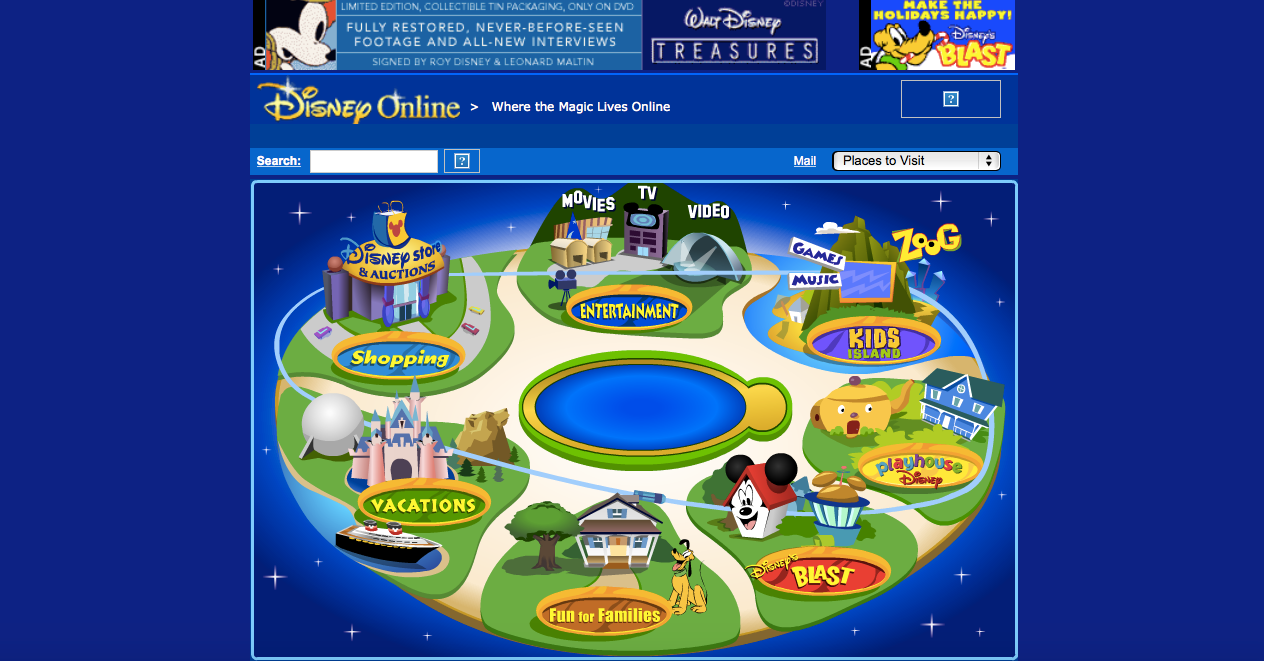
The Disney kids website from 2002-2006
Recently, I read a blog post advocating for banning their child from having a social media presence.  They talked about the dangers of managing to balance an online persona with a real life one.  The toxic environment of immediate gratification, self worth linked to the number of followers and likes on a post, and the dangers of what's out there on the Internet even if predators can't reach your child due to safety controls.  They also loosely, implicitly defined "child" as someone ranging in age from around 7 years old to 12 years old.  In short, the post seemed like it came from an involved, concerned parent who was actively taking an interest in vetting and processing the type of content that their child wanted to/was going to consume.

But with all their good intentions and arguments aside, one question still lingered at the forefront of my mind: is a blanket ban (with no smart phones - economic pressures notwithstanding - or internet and social media access) truly the best way to go about a child's introduction to the world of the Internet/social media?

This is one topic that is near and dear to my heart, despite not having children, because I am someone who a) is a believer in social media as a b) person who will one day (hopefully) be a creator of media for children.  So here's my two cents as someone who's thought about this issue:

For a start, my background with technology.  I am a "Millennial".  Or, more accurately, I am a part-time "Millennial" and a part-time "Generation Z-er" depending on which lists you consult.  I am the boarder year which separates the two.  As a result, you can see a mixed influence of life experiences (and goals and dreams) that both categories have throughout my life.

I don't quite remember dial-up, but I remember when cable television was still more interesting and important to me than the Internet.  Until I was twelve, I had only gone on a new fangled site called YouTube twice - to watch the "Numa Numa Guy" and the "Lord of the Rings: How it Should Have Ended" videos.  The only online site I thought there was was the disney.com website which had amusing games.  I played computer games and I had what felt like a very grown up email address, but the Internet seemed foreign.  I had to ask my parents for permission to go on, but I rarely asked because there was so much else to do.

I got a cell phone when I was ten, although there were extenuating circumstances as to why.  If things had progressed normally, my mother said that I would've received one at the age of fourteen, which is when most of my friends received their own phones.  My first phone was indeed a flip phone, and I remember how exciting it was that there was a camera on it.  I remember getting the first keyboard phone, then the first touchscreen/keyboard phone combo, before the switch to touchscreens was solidified when I was in high school.  I remember when the idea of going on the Internet on your mobile phone was absurdly expensive and the rise of apps and affordable mobile data became the norm.

When I was twelve, the rise of MySpace occurred.  And when I was thirteen, I remember the deeply important messaging system that was MSN messenger.  Shortly after that, the rest of social media followed - as to the major platforms, I got a Twitter when I was fourteen, I became a dedicated Facebooker by my freshman year of high school, I got an Instagram my junior year of high school, and a Snapchat my sophomore year of college (I was late to that Snap game).  And to be honest, almost every account I made was actually made by my mother before I even knew the website existed (my family has always been a techno-optimist type of family).

In short, I would characterise my upbringing with social media similar to the Harry Potter books.  I was alive before, during, and after the development of their continuing presence in culture and society.  I grew up along side their development, so when I was a kid there was nothing to "ban", because my age ran alongside the age of the Internet.

Now, I see so many of my friends, family, and strangers online that are all asking the same question: how do we introduce our kids to social media? I've seen a spectrum of answers to this too.  I know some people who allow their children to have unlimited screen time regardless of age and make a social media account for them before they're born.  I also know some people who still have flip phones, and their children know nothing of the Internet other than as it relates to school projects, and certainly don't have cell phones.

To me, I posit that, like most things in life, to take an extreme position doesn't prepare you or your child well for the "real world".  Here, I am considering the "real world" as that related to the fact that in our current age (and, assumingly, for the foreseeable future), the Internet (and social media) is a mainstay of everything from business to pleasure.  It has defined and shaped our culture, our jobs, our society, our technology, our politics, and everything in between.  To never expose your child to the Internet or social media means that you are not preparing them for how to navigate being a successful, media-literate adult in a competitive job market, ever changing society, and the modern world in general.

One of the main problems with the blog post was that their use of "child" was quite flexible.  Sure, all "preteens" are technically anyone "12 and under", but 7-12 year olds is a huge age range.  For instance, I remember getting paid to "babysit" a 7-year-old as a 12-year-old.  Humourous example aside, the developmental differences between the two cannot be underscored enough.  A 12-year-old is starting to question their identity outside of their family for the first time, they're thinking about teenagerdom, growing up, what it means to be "cool", seeking acceptance and approval from their peers, and are a raging sea of hormones.  A 7-year-old may also be seeking acceptance and approval from their peers, but it is still in a collective experience.  Their family (assuming a healthy dynamic is in play), is still their grounding source of comfort and familiarity.  "Play dates" are the norm rather than school dances in the gym.  Their confidence is built on external approval, but their internal feelings of self-worth are not questioned to the extent that a 12-year-old does.  Bullying is always, unfortunately, apparent, but the amount of stereotypical jokes increase exponentially by the time junior high roles around - and for good reason.  Bullying takes on a more vicious and personal attack during the tender ages of 11-14.  Thus, for a start, I would clearly define what I mean when I say "child".  To me, a "child" is in the age range of "7-10", while "preteen" would be "11-12" year olds.

For my definition of "child", I respect parents who don't want their children to have an online presence.  There is no need for a social media account, when focus should be more on imagination and play in a traditional, developmental sense.  However, I would also add that parents should be sure to take the initiative here and make sure that recreational activities, play dates, arts and crafts supplies, etc.should be provided in lieu of screen time.  This includes for yourself - if you don't want your child to be asking you why they can't have a phone, model the behaviour you want by not being on your phone 24/7 and being present in their lives.  Additionally, the lack of social media accounts or a limit on Internet access doesn't mean a blanket ban.  Children in this age range should be able to start learning about the Internet just like how they're introduced to learning their "Three Rs".

To me, an age-appropriate level of Internet exposure here would include things like using the Internet for school reports, for supplementary material to their general education (ie educational videos or as a follow-up to a trip to a museum, etc), art projects (photo collages are a lot of fun), and for limited online gaming (this would have a time limit attached, with vetted online gaming websites approved of, but I remember having a lot of fun playing online flash games as a kid, none the worse for wear).  It would also be a great time to introduce children to how to use the Internet in a smart, proactive way.  Teaching them proper research techniques and online etiquette would be great.  Don't be vague by saying there's "dangerous stuff out there", or worse yet, not giving a reason at all if your child doesn't understand why they aren't able to have crazy unlimited access.  It's perverse human nature to go against what we're told.  You can't monitor your child 24/7 (and you shouldn't).  Therefore, it's up to you to inform your child how to make intelligent, informed decisions when you're not there.  You don't have to be explicit and go into every danger on the Internet, but you can give them solid reasoning and age appropriate supplements for what social media "provides".  For example, that you want to make sure the content online is relevant to what they're looking for, since there's a lot of content requires adult help to wade through.  Listen to the reason your child wants to go online.  For instance, if your child wants an Instagram to share photos, ask them if instead they want to do a scrapbook project to show their friends at school.

I'm also not sold on the excuse not to give children of this age a cell phone.  I'm not saying go all out on a smart phone, but a standard flip phone that has access to a camera, calling, and texting isn't a bad idea so your child can communicate with you in an emergency.  You can also start building up good cell phone usage habits and communication etiquette early.  Everything is a learning opportunity, and your child will also feel the importance of being trusted with such a device.

As a "Preteen", I think it is acceptable to begin introducing your child to social media.  Time limits, friend requests, etc. may have to be monitored and implemented, but to completely deny them a part of learning how we communicate in the digital age is ridiculous.  It would be akin to never letting your child learn how to socialise at an age appropriate school dance or go to the cinemas with their friends.  And it's not like the previous building blocks would go away.  You would continue to allow more and more access to the Internet for a variety of reasons and topics related to school ("business") and social activity/gaming ("pleasure").  As long as you're taking an active role in equipping your preteen with sound decision making skills, you're doing your job.

That being said, if your child doesn't want a social media account or online presence, I wouldn't force the matter.  But in a world where peer pressure exists on and off screen to join the Internet, I doubt many parents will get away scot-free with the social media question.  Sure, to understand the complex realities and psychological/sociological impact of social media is tough.  It's hard enough to deal with school as an emerging adolescent, and I think the blog was right in saying that kids need a break and a chance to develop themselves offline away from the global lens/archive that the Internet provides.

However, that doesn't mean that a blanket ban makes sense either.  This is a conversation you and your preteen will eventually have to have.  Do it now when they're still going to you for permission and advice rather than a "post-exposure" talk when they did it behind your back anyways.  Checking out all the corners of a particular social network request that your preteen makes for traces of evil is a valiant goal.  However, it will also prove to be a fruitless one.  Every corner of the Internet will have some content on it you don't want your child to be exposed to - no matter how "kid friendly" it tries to be.  But that's no different than every day when your child goes to school, even if you vetted and toured the facilities years before your child ever attended.  We live in a broken world, and that will be manifested wherever you go.  You can be smart and proactive about facing these difficult realities, but a quest for a perfect "safe, happy" online place for your preteen is a fool's errand.

Your child's identity on and off line is important to help cultivate.  The Internet is forever, and accounts they make at twelve could be the same accounts their future employers look at.  This is not a hard concept to understand, and I think that we sell preteens short when studies say that they can't understand concepts like this because they're self-centered and impulsive and immature.  Yes, preteens are definitely all of these things.  But to treat them as if they have no ability to make decisions at all is a disservice to their personhood and to yourself as a parent.

In short, I believe a blanket ban on the Internet and social media doesn't help your child/preteen develop the skills they need to navigate a world where those things are an ever present reality.  A key part of parenting requires trusting your child/preteen, and instilling within them smart, decision making skills at an age-appropriate level.  Why should we decide this role only applies to their offline experience?


Monday, March 5, 2018

Current Contemplation: A New(ish) Career in a (Probably Not) New Town (Personal Edition)

Because you can't have enough Pines Family goodness in your life
So after much internal debate, mediation, journaling, and general contemplation, I feel confident enough in my decision making to announce publicly on my blog about where I think my career is headed, along with my story and reasoning behind it.

I have officially decided to (for "realsies" this time) commit myself to creating and developing children's television.

For those of you that this comes as a shock for, and for those of you thinking "Jade didn't you say that four years ago?", then the below reasoning and story is for you:

The first career I ever remember wanting to be was a teacher.  As time went on, that changed slightly to being a middle school teacher.  I loved tutoring and helping my classmates, volunteering at events with kids at them, I was even a team leader at the annual Vacation Bible School at my church and a middle school church camp counselor for years.  I wanted specifically to teach sixth graders as a math or history teacher, but I also would've been okay with any year in junior high.  I wanted to do so because I loved that 11-14 year olds still have the optimism and imagination of children, while simultaneously starting to understand sarcasm, and beginning to think of themselves outside of their family unit.

Meanwhile, by the time I was fifteen my dreams had changed.  I had officially decided to pursue film-making due to a combination of factors.  And by my senior year of high school I had been accepted to Biola University, the Cinema and Media Arts department, and the Torrey Honours Institution.  I was ready to begin my career in film-making just outside of Los Angeles itself.

Specifically, as my first two years taught me, as a first assistant director.  My mentor Olivia took me under her wing my freshman year, and I spent the next three years working tirelessly towards my goal.  I wanted to work for the BBC in London, and, seemingly, all that was left to do was to "seal the deal" by either starting my career in Los Angeles or work on getting into the guild in the UK.

Then, around two years ago, I had a change of heart, albeit in gradual stages.  The first change was that I didn't want to work as an assistant director anymore.  Perhaps to start out my career, but the hours on set were long, and the job exhausting.  Not to mention that I didn't have as large of a say (creatively) in the type of content I was helping to make.  I had had a taste of that type of creative power in co-writing and producing my senior thesis with Ike, and I found it better suited to my palette.

The second change was that I decided to narrow my focus to children's media.  It seemed to align more with the type of inner conflict I had about media, my personal background, and overall skill sets.  One of the biggest questions I had about going into film-making was if I was a part of the problem rather than the solution.  Our screens and senses are over-saturated and over-stimulated with content.  The damage to our psyches yet unknown, not to mention that anything I made would simply be white noise.  How would I be able to even make a small dent in the vast ocean of great, mediocre, and terrible films, shows, programs, and videos that are produced every year? The obvious solution to me was children's media.  There's a huge gap that needs to be filled for quality children's content.  There's only a handful of shows that rotate for every demographic, not to mention that most of them are more about marketing than investing in and enriching the lives of their impressionable viewers.  The things we watch as children and young adults leaves a lasting impression on us for the rest of our lives - it's important to do it right.  No more worrying about having enough "influence" or "inspiration" required.  Add to this my previous passion and gift for teaching, and this seemed like the harmonious balance I was looking for.

The third change, was probably the biggest: my love of David Bowie.  Sure, part of it helped me understand that I wanted to go into children's media (thank you Jim Henson for the gift of Labyrinth), but a larger part of my obsession with Bowie reflected my own dwindling interest in going into film.  So I decided to do an internship at a music management company rather than film.  I started developing my musical palate with a type of zeal that my inner cinema connoisseur hadn't seen in years.  It was this obsession that also had me feeling more adrift than ever, in some ways.

Now, I found that I wanted to be seen as an Artist rather than a filmmaker or assistant director or teacher or any other identifying noun I had clung to in the past.  I also developed a larger love of the arts as what I learned in the film department dwindled and my interest in literature, music, and classical art grew.  I found myself more interested in talking about the latest musical trivia I had learned rather than the state of Hollywood or the Oscars.  (Although to be fair I haven't been super invested in the awards ceremony - or any of them - in at least five years).

And so began my move to New York that has been the work of this blog to reflect on and ponder and so on and so forth.  A transition that was in part possible due to my dwindling interest in film-making, my uncertainty about what type of career I wanted, my love of Bowie, my worry over life post-graduation, and generally taking what a lot of people would call a "gap year" to sort myself out.

The past six months have been nothing but tearing me down.  And that's a good thing.  It reminds me of the type of serious, rigorous spiritual work I did four years ago, when I knew just enough to know I didn't know anything.  A time when everything seemed a bit overwhelming and the future uncertain.  I felt like I was waiting for the gift of sound and vision, with nothing to do, nothing to say in the meantime.  I felt like a sponge that needed to soak up as much as possible to inform my emerging identity and decide who I wanted to be.  At the end of that spiritual journey, I found myself with a better understanding of my spiritual failings, my identity in Christ, and my first interest in children's media.

Now, I feel like I've undergone that journey amplified again to the nth degree (trying to be a proper adult for the first time, isolated from friends and family will do that to you).  And the past six months have felt like me once again re-learning the depths of my brokenness (in a good Jesus-y way), the beauty of Christ, and my identity rooted in Him.  This was compounded on top of my journey as an artist to figure out what I want to invest in and where I want to go.  Although I am open to spontaneity in my life and career, I still felt like I was lacking a larger goal to guide me through the curve balls life would be (and was) throwing at me.

Sure, I doubt this will be the last time something like this (questioning life, myself, and God - the small things) happens.  However, I doubt it will be quite so all-consuming like it is now.  When twenty-somethings want to be movers and shakers and change the world, it makes sense that we would be in the middle of our existential angst.

But now I feel like the next six months have been steps towards rebuilding my life.  My passion for Bowie is still a silent flame (like Harry Potter) to be carried on forever, but the bright spark that it was in the beginning has started to diminish, like all my obsessions do over time.  As a result, although I believe Bowie is excellent for soul searching, I don't think that he can directly guide me in the path of the type of content I want to create.

Instead, it was my mini-obsession of Gravity Falls that helped me remember my roots as an artist.  I was so frustrated with wanting to create good content for adults, but feeling like a failure.  Most of the things I wanted to talk about seemed to be better addressed elsewhere by artists more talented than myself (and who have lived a lot longer).  I also felt like I was spiraling back into the problem of looking behind instead of looking ahead when it came to the future of any industry related to art, media, and entertainment.  I wasn't excited about the future, and I wouldn't dream of meeting another artistic genius like Bowie in my lifetime.

But that simple kid's show reminded me of how great children's media can be.  And how my lifelong interest in investing in children has withstood all of my crazy obsessions over the years.  Indeed, looking back on my Netflix queue the only things I've watched recently are children's television shows or movies.  I rarely watch something for "adults" in my free time without an external reason, but I'm always up for watching a good children and family piece.  It felt wholesome and real in comparison to the darker side of adulthood.

This is not to say that childhood is a place solely filled with magic and wonder.  There are many times that youth has a violent, darker, passionate side that occurs whether or not they have been exposed to suffering earlier than they should have (ie A Clockwork Orange, The Sailor Who Fell from Grace with the Sea, etc).  Not to mention that just because a piece is for children doesn't mean that darker elements can't or shouldn't invade it (literally read any classic fairy-tale).  But it does mean that the darker content can be balanced with the light-hearted.  It's a place where good conquers evil, love is greater than anything in the universe, and redemption can be sought.  To be bitter and sarcastic and cynical seems better to the world.  Just look at our political and social climate today.  But children's content knows that sincerity and vulnerability are what matters - that hope isn't a fairy-tale and that a better tomorrow can be fought for, not in vain.  These are the types of stories I'm interested in sharing with the world.  Children's media is where I feel my spiritual life thriving instead of dying.

But why, you say, does it have to be television then? Simply because kids today are interested in their screens more than anything else.  It's the best medium to reach my target audience, and hopefully to also encourage them that there's more to life than just watching media - music and literature and other art forms are also worth participating in.  Heck, art itself is worth valuing in a culture which has largely dismissed the humanities in favour of science and technology.  (Pro Tip: It's not either/or, but a both/and investment!)

On a more practical level, children's media is also a good fit for me.  It means that I can use my degree (it wasn't just a waste of money!), and hopefully be employed in a variety of positions to ultimately work my way up into the higher echelons of creating and developing children's content.  It also means that I have a specific goal once again that can inform my decision making for the types of jobs I take and apply for rather than a frenzied free-for-all.  (It's only good for so long to keep every single door open, and I'm at the age where a few doors need to be shut).

And finally, what does this mean for the immediate future Jade? Well it means that so far everything is plodding along quite nicely.  I still don't have a specific career title in mind or a full-time job, but right now I'm working on gaining more administration experience (slowly but surely!) to be able to apply aggressively for administration assistant and executive assistant jobs that will further my ultimate goal of getting a foot in the door.  And come this November I can officially put a year's worth of admin experience on my resume that I didn't get at university.  So I can quit worrying so much every day about if I'm "doing the right thing" or "making any sort of progress" in my field.

I also don't have any firm plans in terms of what city I hope to live in, what company I want to work for, or what exact career path I plan on taking.  I know that administrative experience is crucial to get that "behind the scenes" studio work, which is something I want to do.  I also know that LA is the obvious choice for such a job (film and all that), but I'll cross that bridge when I come to it, as I still enjoy living in New York.  And similarly, although The Mouse is the obvious company choice, who knows what indie studio might also have something great worth investing in? All I know is that creating and developing children's media doesn't seem like a distant Perhaps.  It also doesn't feel like a suffocating, inevitable path until death with a large helping of FOMO on top (like some of my other options have felt like).  Instead, this feels Right.  This feels like a prayerful revelation in response to my great prayer team that has continued to keep me in their thoughts.  It's something I feel completely content and at ease with deciding, as much as any twenty-something can feel such a thing.  I may not be Bowie, but I think I know where my art form and talents lie, and that's in developing/creating children's content.

A few months ago, I was talking with someone I met in a park who was trying to become a music producer.  He told me that the biggest struggle isn't to get your number one success hit break through.  The biggest struggle is actually to get that first, mediocre break through.  The medium success story that shows that someone took a chance on you, and that you have your foot in the door.  The rest will simply follow if you're a dedicated worker.  And I tend to agree with this belief.  Right now things are still pretty tough.  I've interviewed for a few full-time positions, but none of them have chosen me yet.  But I'll keep trying, and I'll keep applying.  I agree with many quotes from famous artists and "successful" industry people that a key difference between them and another person trying to "make it" is that they never gave up.  They kept persevering and learning after rejection after rejection, and I hope to emulate that as well.  Bowie was a top proponent of failure and making mistakes as an artist.  I can only hope to be as courageous and fearless as I follow in his footsteps.